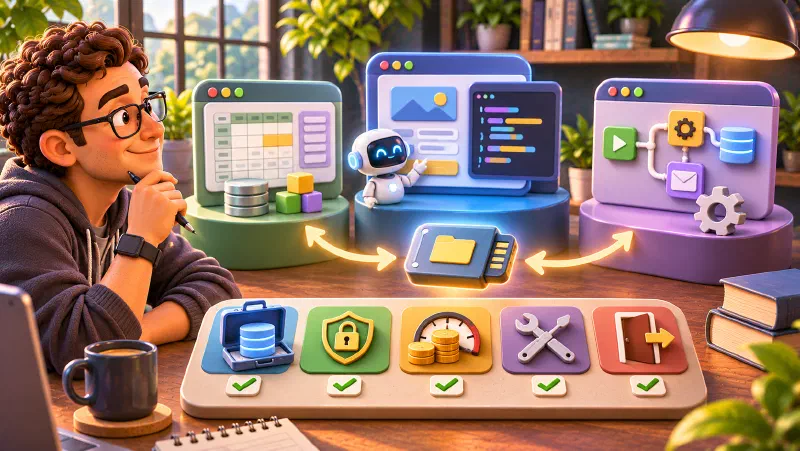
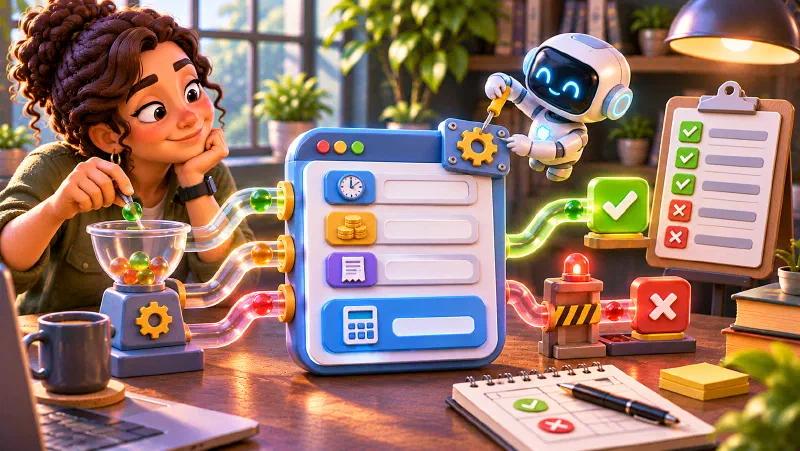
A polished screen can make an app seem ready for visitors. But security is often invisible in a preview: who can read someone else’s data, where are credentials stored and what happens when systems fail?
No-code can hide complexity; vibe coding can generate code you haven’t inspected. Neither removes responsibilities to people who rely on the software.
In brief: a fictional-data prototype may be appropriate for learning. Before accepting real accounts or payments, check identity, authorization, inputs, storage, secrets, dependencies and recovery, with expertise proportional to the risk.
Advertisement
Prototype versus operating service
Our quote simulator accepts invented numbers, calculates locally and has no user accounts. It doesn’t need to store customer proposals.
If you add Save quote and Sign in tomorrow, new questions appear:
Where are records stored?
Can one account view another’s quote?
Who revokes sessions and handles password recovery?
Can users export and remove information?
Who fixes failures when people depend on the app?
“The platform handles it” isn’t a satisfactory answer until you know exactly which controls exist and how they are configured.
Authentication isn’t authorization
Signing in does not grant every permission
A production control must verify identity and permission for each record before revealing data.
Authentication identifies a person. Authorization decides which action they may perform on a particular resource.
Imagine two fictional workshops, Sunrise and Horizon. Someone signed into Sunrise changes a quote identifier and tries to open Horizon’s record. If the backend shows it just because the person is logged in, access control is broken.
Hiding a button in a visual editor may not prevent direct access. An AI-generated app might accept a browser-supplied owner identifier without checking the authenticated user’s membership.
These are responsibilities, not certification of security or legal compliance.
AI can add incomplete controls
AI might install dependencies, improvise authentication or place private tokens inside frontend files. A working screen doesn’t prove such decisions safe.
Don’t grant unlimited production, deletion or financial permissions for a classroom experiment. Isolation and fictional data limit consequences.
Before you publish
Document a release gate:
Main behavior passes valid and invalid inputs.
You know which data leave the browser.
No private API keys ship to users.
Identity and permissions have meaningful negative tests.
Someone owns support, fixes, recovery and cancellation where needed.
Public copy matches the actual product.
For our fictional calculator, don’t add accounts just to tick a box. Avoiding unnecessary data collection is itself a good safety choice.
Make the stage explicit
A prototype can be shared for demonstration using fake inputs without becoming a commercial service. Real internal data and public customer payments require progressively more review.
If important evidence is missing, label it demo, not approved product.