

Latest
Your app looks great. Is it safe for other people to use?
Understand permissions, API secrets, data exposure and the boundary between an AI-built prototype and a secure service.
Read full article

Latest
Understand permissions, API secrets, data exposure and the boundary between an AI-built prototype and a secure service.
Read full article
Compare visual editors, spreadsheets and AI builders through data ownership, portability, pricing boundaries and maintenance.

Explore realistic no-code and AI projects, and distinguish prototypes, internal workflows and customer-facing products.

Use a shared spec with an AI app builder, test tricky inputs and compare against a working reference.

Choose the next step using observed value, maintenance cost, permissions and portability without assuming everyone needs custom code.

Understand visual app building, AI-generated code and reviewed AI-assisted engineering, with practical trade-offs for solo founders.

Build a small calculator with a spreadsheet, validation and checkable outcomes, while recognizing its limits as a customer app.

Understand deployment, privacy, platform limits, maintenance and total cost before making your prototype public.

Follow data through browser calculations, cloud spreadsheets, webhooks and APIs before connecting your no-code or AI-built app.

Create a small, shared spec for no-code and vibe coding, covering inputs, validation, calculation and checkable outcomes.

Create reproducible bug reports, distinguish visible failures and silent errors, and verify fixes without introducing regressions.

Learn MRR, churn, activation and costs using a fictional spreadsheet and choose whether to improve, grow or stop.

Compare SaaS, services, templates, and custom software based on customer needs, distribution, costs, and operating responsibilities.

Understand what makes software a service, how it differs from templates and professional services, and why operating the product matters as much as building it.

Distinguish authentication from authorization and plan tenant boundaries, backups, deployment, logs and test-mode billing.

Look for recurring jobs, workarounds and reachable buyers before imagining a product. Form a hypothesis you can investigate.

Compare billing models, calculate illustrative MRR and distinguish recurring revenue from profit.

Turn a customer need into a minimal workflow, essential data, bounded scope and observable checks.

Create, update and retrieve proposals with Python and SQLite; learn to check behavior and understand why this is not yet production SaaS.

From Attention Is All You Need to modern generative AI: learn the Transformer story, self-attention, token relationships and what the architecture really does.

Understand what tokens are, why they are not words and how they affect language-model inputs, outputs, context windows and API costs.

Separate revenue, expenses, and your time; record deliveries, spot recurring work, and decide when automation makes business sense.

Turn a business hypothesis into a scoped offer with clear outcomes and conditions, then approach prospective customers without overpromising.

Learn to observe real friction, research evidence, and frame a business hypothesis with AI without mistaking signals for sales.

Understand text recognition, document layout and parsing, compare PaddleOCR and Indra, and evaluate errors using a safe document exercise.

Understand speech recognition, text-to-speech, Whisper, faster-whisper and Kokoro, with evaluation criteria and a Portuguese transcription exercise.

Compare text-to-video and image-to-video, explore CogVideoX and Wan, hardware needs, temporal consistency and a Diffusers example.

Understand SLMs and compare examples from 0.6B to 4B parameters, learn suitable business tasks and run a bounded local model comparison.

Choose local AI models with Ollama or LM Studio, understand hardware and quantization, and compare documented Qwen3 and Gemma 3 examples.

Understand AI benchmarks, accuracy, F1, WER, pass@1, tokens per second, latency and memory — then design a small task-specific evaluation.

Navigate Hugging Face Models, Datasets and Spaces; check model cards, licences, revisions, weights, formats and evaluation evidence.

Learn what weights, parameters, tokenizers, pretraining, fine-tuning and LoRA mean, with practical examples for builders who use models.

Understand Model Context Protocol hosts, clients, servers, tools and resources, then connect a read-only documentation MCP server to Codex.
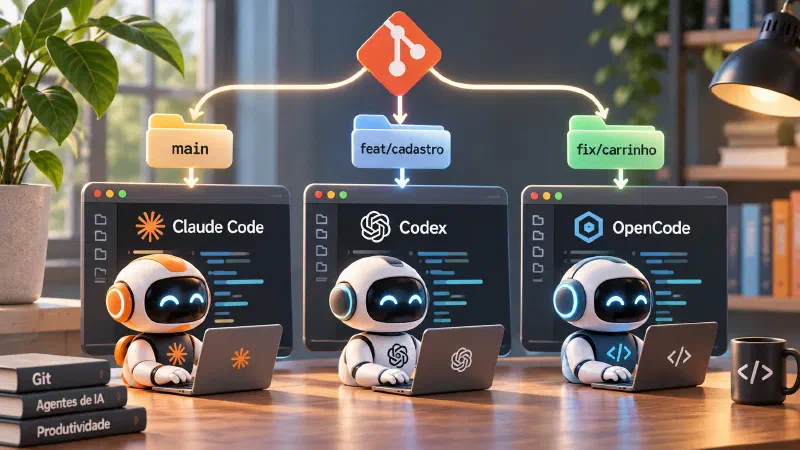
Understand the difference between a Git branch and a worktree, why parallel AI sessions benefit from separate directories, and how to practise safely.

Understand oh-my-opencode-slim, its specialist agents, OpenCode 2.3+ requirement, installation, presets, model access and configuration checks.

Install Claude Code, Codex CLI and OpenCode through official routes, check authentication and versions, and complete a safe first task.
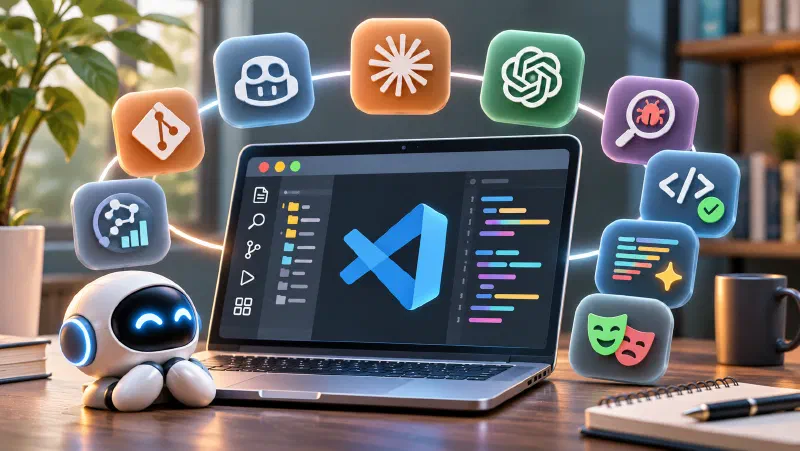
A practical VS Code toolkit for AI coding: Copilot, Claude, Codex, GitLens, Error Lens, ESLint, Prettier and Playwright, selected by purpose.
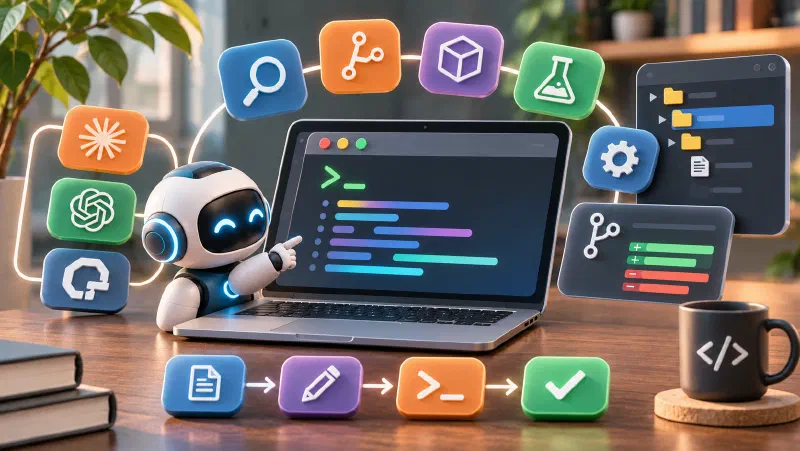
Learn what rg, git diff, shell tools and build commands tell you about Claude Code and Codex — and why neither agent is tied to one search command.

Understand the execution loop, context, tools, permissions and verification behind AI coding agents — and why a harness is not just a long prompt.
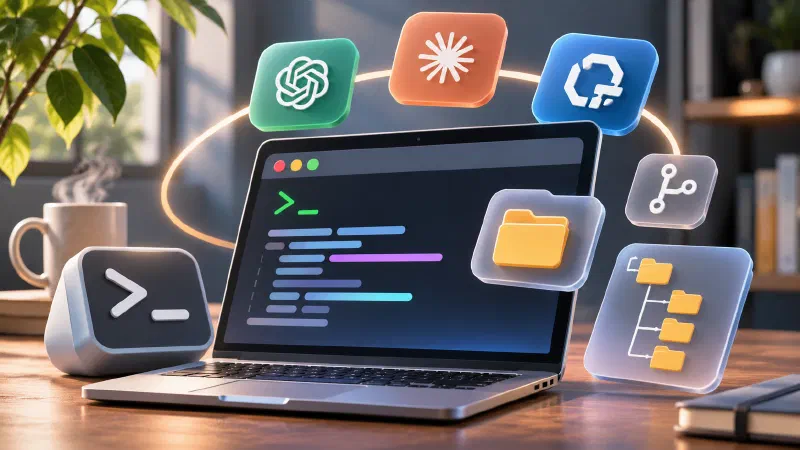
Learn what a terminal, shell and working directory are, practise safe first commands and understand the environment used by Claude Code and Codex.

Gemini Notebook can turn PDFs and spreadsheets into interactive sites without coding. Learn the free limits, how sharing works and what businesses should check.

Brag is an open-source agent skill for creating short product launch videos. Learn how the classic and Slim workflows operate and what solo founders should check.

Explainroo combines coding agents, JavaScript scenes, Kokoro speech and Whisper timing to make explainer videos. Learn how it works and what solo creators need.

OpenPost combines social publishing, scheduling and AI-agent tools. See how it works, its costs, integration limits and when it suits a solo business.

ChatGPT for Sales can retrieve CRM data and create supported tasks through connected tools. Learn what changed, what it requires, and how to test the basics.

Agent Desktop gives AI agents structured access to desktop app controls instead of requiring screenshots for every interaction. Learn where it helps, where it fails, and how to test it safely.

Learn why a ChatGPT business profile may matter for discovery, which details owners can manage, and who can claim a listing today.

Independent founders describe how they found their first customers. Learn what the anecdotes do and don't prove, and try a seven-day sales investigation.

Ten people accepted a SaaS trial but never finished setup. Learn to distinguish signups, activation and payments, then diagnose the drop-off safely.

Qualifying Brazilian Simples Nacional firms must issue service invoices nationally from November 2026. Older service periods may use city portals.

Google has brought Gemini into Apps Script. Learn who can access it, how to try a small business workflow safely, and why permissions still matter.

Five practical context patterns for agent workflows, with limits, realistic business uses and a small experiment instead of unsupported savings claims.

Five small workflows for leads, customer requests, proposals, documents and reporting, with pricing caveats, tool permissions and a safe test.

Anthropic runs agent sessions on managed infrastructure. Understand tokens, runtime charges, permissions and realistic solo-business use cases.

Practical agent workflows for customer requests, documents and task tracking, with permissions, costs and a safe experiment — no invented income claims.

Describe composition, lighting and color from images to build reusable style briefs. Know what AI can infer, what it cannot, and how to test consistency.

Three ways to find customers without chasing followers: specialized services, digital products and useful answers, with real trade-offs and a small test.

Andrej Karpathy's idea file proposes raw sources, Markdown notes and maintenance rules. Learn ingest, query and lint with clear limits and a safe test.

Run Gemma 4 through Ollama Cloud with Claude Code without a local GPU. Understand the setup, per-token pricing, limitations and a safe way to compare costs.

Deep Agents is a LangChain and LangGraph-based agent harness and installable package. Understand planning, persistence, limits and a safe first test.

Understand document ingestion, retrieval and generation. RAG isn't perfect memory, and safe use requires source checks and access controls.
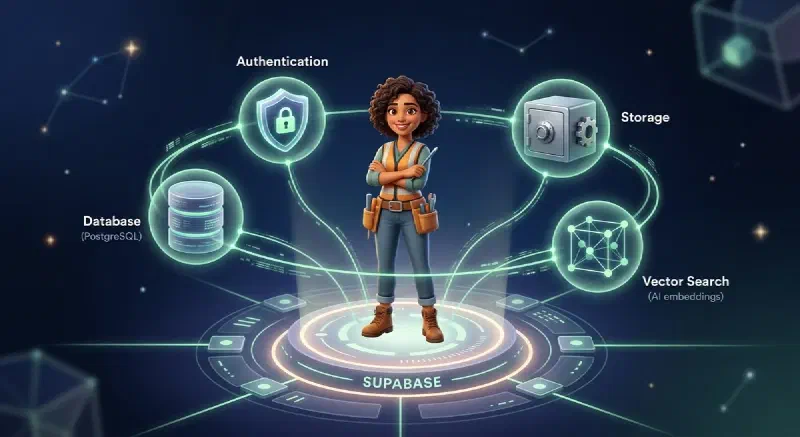
Supabase brings Postgres, Auth and vectors together. Understand RLS, privileged service keys, costs and a safer first security test.

MCP can expose supported tools, but remote access needs authentication, authorisation and real demand. Explore a read-only test.

Use AI for competitor research, drafts, lead triage and campaign planning without confusing preparation with publication. Five cautious workflows.

Compare Playwright and Cypress on debugging, browsers, CI and maintenance. No invented speed benchmarks or universal winner.

Hermes Agent can reuse skills and memory, but it doesn't guarantee self-improvement or revenue. Understand permissions and a safer first test.

Local Gemma 4 inference can avoid hosted token charges, but hardware, memory, energy and quality remain essential. Compare carefully.

Chrome DevTools AI assistance can explain page styles and other developer context, but availability and reliability vary. A cautious debugging guide.
Compare authorised API snapshots and add AI summaries only where useful. A change is not proof of demand or revenue.

Explore eight uses for structured design briefs, with licence, trademark and demand caveats rather than invented sales forecasts.

MiroFish Offline explores fictional agent reactions, not real customer demand. Understand hardware, privacy and a cautious first trial.

Frontend instructions can guide composition, messaging and accessibility, but a better-looking page doesn't prove increased conversion.

Qwen Code is a coding-agent interface with configurable model providers. Understand when APIs, local inference, costs and permissions differ.

Playwright 1.59 includes screencasts, action annotations and browser.bind. These improve visibility, not guaranteed agent reliability.

A Markdown design brief can guide AI frontends if the agent actually reads it. Learn what to document and how to check consistency.

Paperclip helps coordinate agent tasks and reported budgets. Learn where provider invoices, retries and permissions still matter.

Build a fictional lead-research exercise with explicit authorisation, human review and realistic cost limits. No automatic prospecting claims.

A Markdown knowledge workflow can use Claude Code, but requires permission checks, backups and cost review. Practical limits and examples.

Liquid Foundation Models can run on suitable devices, but model licences, memory and total costs matter. Evaluate before assuming savings.

Identify the user, buyer and decision maker, investigate actual work, and interpret commitments without magical validation thresholds.

Explore Workers for serverless APIs, including free-tier allowances, CPU limits, storage, auth and realistic operating expenses.

A Claude API workflow can connect business operations, but token charges, permissions and output reviews remain essential.

Use Reddit communities to discover recurring problems without treating anecdotes as paying demand or scraping private profiles.

PicoClaw's small agent runtime may run on low-cost boards, but the model, power, networking and support still cost money.

Google Trends indexes are relative, not search volumes or sales forecasts. Learn to test business ideas without made-up benchmarks.

Community complaints and public trends can suggest problems, but demand, buyers and prices require separate validation.

vLLM optimises serving for supported models; cost and throughput advantages require a benchmark on your actual workload.
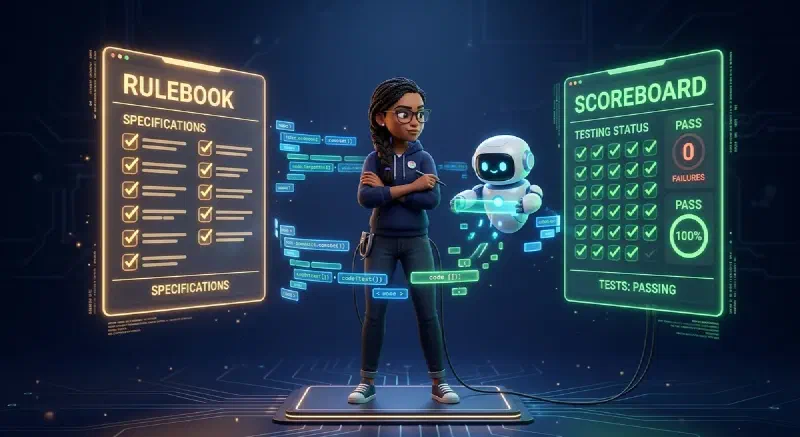
Tests and acceptance specs guide coding agents, but they do not guarantee correct code. Start with a verifiable failing test.

Hermes can reuse skills, but a cheap VPS does not include model inference, unlimited uptime or a proven business.

GLM-OCR offers document extraction, but business demand, accuracy, privacy and GPU requirements need independent testing.

Deep Agents provides files, planning and subagents, but secure production use requires testing, permissions and operations.

OpenClaw supports agents and integrations but needs gateway security, pairing, permissions and monitored model costs.

Microsoft still documents VibeVoice-ASR, but removed official TTS inference code. Check availability and consent before planning products.

Parallel coding agents can divide work, but conflict, dependency, rate limits and review may erase the expected speed-up.

Community complaints and manual workarounds suggest hypotheses; actual buyers and prices must be tested separately.

Chatterbox remains open for research but its maintainer retired it commercially. Check voice consent, maintenance and product risk.

Command-line automation can save repetition, but commands, credentials and installers need careful review.

Scrapling is a Python scraping framework; access permissions, data reuse and customer demand require checks.

No-code workflows can help with triage and drafts, but require supported integrations, permissions, budgets and review.

Combine computer vision, rendering and workflow tools to explore real services, while validating licenses, errors and demand.

What it means to run a one-person business, where AI actually helps, and how to spot a problem worth investigating before choosing tools.

Understand page RPM, ad impressions, eligibility and publisher policies. Revenue examples are arithmetic, not observed outcomes.

Learn how to use Page Agent to automate web workflows with AI and JavaScript, without complex backend. Practical guide for solopreneurs and developers.

Learn how to use Impeccable to generate professional design with AI assistants, eliminating common clichés. Practical guide with 7 modules and 20 steering commands.

Practical guide to using Notion as the operating system of your solo business: centralize clients, products, content, and revenue in one place.

Build games and prototypes with Godot, validate commercial demand, and estimate costs without income promises.

Learn how to use Claude Dispatch to automate AI tasks from your mobile while the desktop handles processing. Practical guide with mobile-desktop integration, local security, and predictable pricing.

Learn how to build a squad of virtual employees that work together automatically. Architecture, orchestration, and practical implementation.

Learn how to use MiroFish, a swarm intelligence simulation engine, to test launches, pricing strategies, and marketing campaigns before spending real time or money.

Learn to use FreeCAD and OpenSCAD to design 3D parts with code, automate batch iterations, and build recurring income selling models and printed parts.

Learn what WebMCP is and how to make your micro-SaaS agent-ready by explicitly declaring capabilities before your competitors take advantage.

How to use AI agents to transform debugging from a solitary task into a collaborative process. Practical examples with Chrome DevTools MCP.

Choose a delivery and pricing model by comparing your skills, sales effort, maintenance, and costs without income promises.

Learn to build autonomous AI agents that execute tasks without human intervention. Practical guide with code, real use cases, and common pitfalls.

Build, orchestrate, and scale subagents in Claude Code to automate complex tasks. Practical guide with working code and real-world examples for independent builders.

Complete guide to using LTX-2 and creating professional videos without subscriptions. Step-by-step setup, use cases, monetization, and limitations.

Audit and maintain business profiles with permission, respect review rules, and offer practical local business services.

Compare Amazon KDP, Gumroad, Etsy, Payhip and course platforms by distribution, transaction fees and the real cost of each sale.

Discover which open source AI models run on your computer (8GB, 16GB, 32GB+) and how to use local AI to build businesses with complete privacy, zero costs, and full autonomy.

Understand the costs and maintenance of digital products, SaaS, and repeatable content, with scenarios and a validation plan.

Lightpanda is a headless browser built in Zig that can reduce resource usage for supported workloads. 9x less memory than Chrome, compatible with Puppeteer and Playwright.

Learn programming logic, spot useful automations, and prototype ideas through practical illustrative examples.

Create original ASMR soundscapes, verify Suno rights, and understand YouTube monetization requirements.
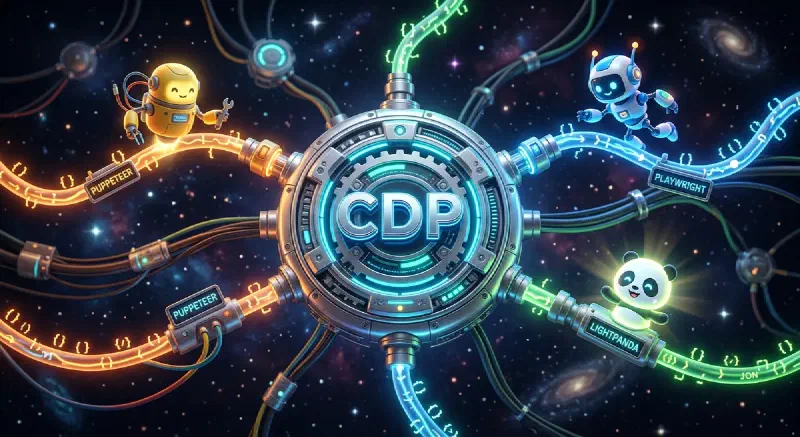
CDP is the protocol powering Puppeteer, Playwright, and Lightpanda. Learn how it works and how to use it to build automation tools and products that generate revenue.

Chrome DevTools MCP connects LLMs to the browser via Model Context Protocol. Learn how it works, what automations it enables, and how solopreneurs can build products with it.

Evaluate transcription, speech synthesis, and video using open models, hardware, licenses, and operating costs.

A practical guide to commercial models, validating demand, and measuring operating costs without revenue promises.

Learn to build a custom ebook factory using AI and open source tools. Full stack, automated workflow, and monetization strategies for solopreneurs.

Explore AI, design, automation, and management tools with free-access options; check current limits and licensing.

Learn how to use n8n to automate your solo business — practical workflows, real examples, and how to start without coding.

Validate a recurring problem, build a first deliverable, understand MRR and churn, and decide whether a micro-SaaS is worth it.

Learn how to build AI agents that automate repetitive tasks — from concept to execution, with practical tools and real-world examples.

Practical guide to building a Micro-SaaS using AI tools — validation, development, pricing and launch, all with AI as your copilot.

Learn to investigate demand through conversations, behavior, and commitments without mistaking praise, clicks, or five interviews for certainty.

A complete tutorial for turning simple requirements into a working webpage, reviewing copy with AI, and checking the result without infrastructure.

Learn how to create custom skills in Claude Code to automate code review, commits, documentation, and other repetitive workflows.

Compare no-code, low-code, coding agents and traditional development through costs, data ownership, maintenance and security.
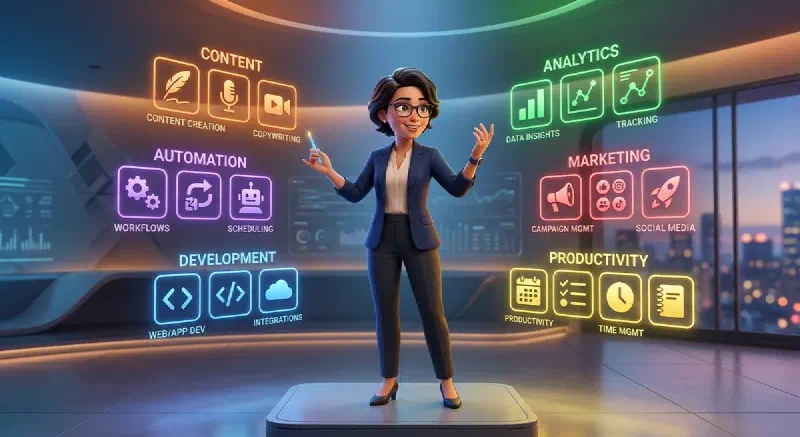
Compare AI tools by task, full cost, privacy, integrations, and quality with a decision matrix and a seven-day evaluation.
Advertise
Solopreneurs, makers and creators who use AI and automation every day. Editorial and media formats for brands that bring real value to this reader.
Every partnership goes through editorial approval. No misleading promises.
Get in touch
Have questions, suggestions, or want to collaborate? Fill out the form below and we'll get back to you soon.
Prefer email?
contato@caminhosolo.com.br